How To Have A Lucid Dream With Wake Back To Bed
Wake back to bed puts you right at the doorway of your longest dreams of the night. Here's how to do it, step by step, and pair it with MILD to have a lucid dream.


If you've been trying to have a lucid dream and nothing is happening, the problem might not be your technique. It might be your timing. Most of us practice right before bed, but your best chance of becoming lucid comes hours later, in the early morning.
That's where a technique called wake back to bed comes in. You set an alarm, get up for a few minutes, and go back to sleep right before the longest dreams of your night. It's simple, it works with the techniques you might already be using, and it's one of the most reliable ways to have a lucid dream that there is.
Why The End Of The Night Is Where Lucid Dreams Happen
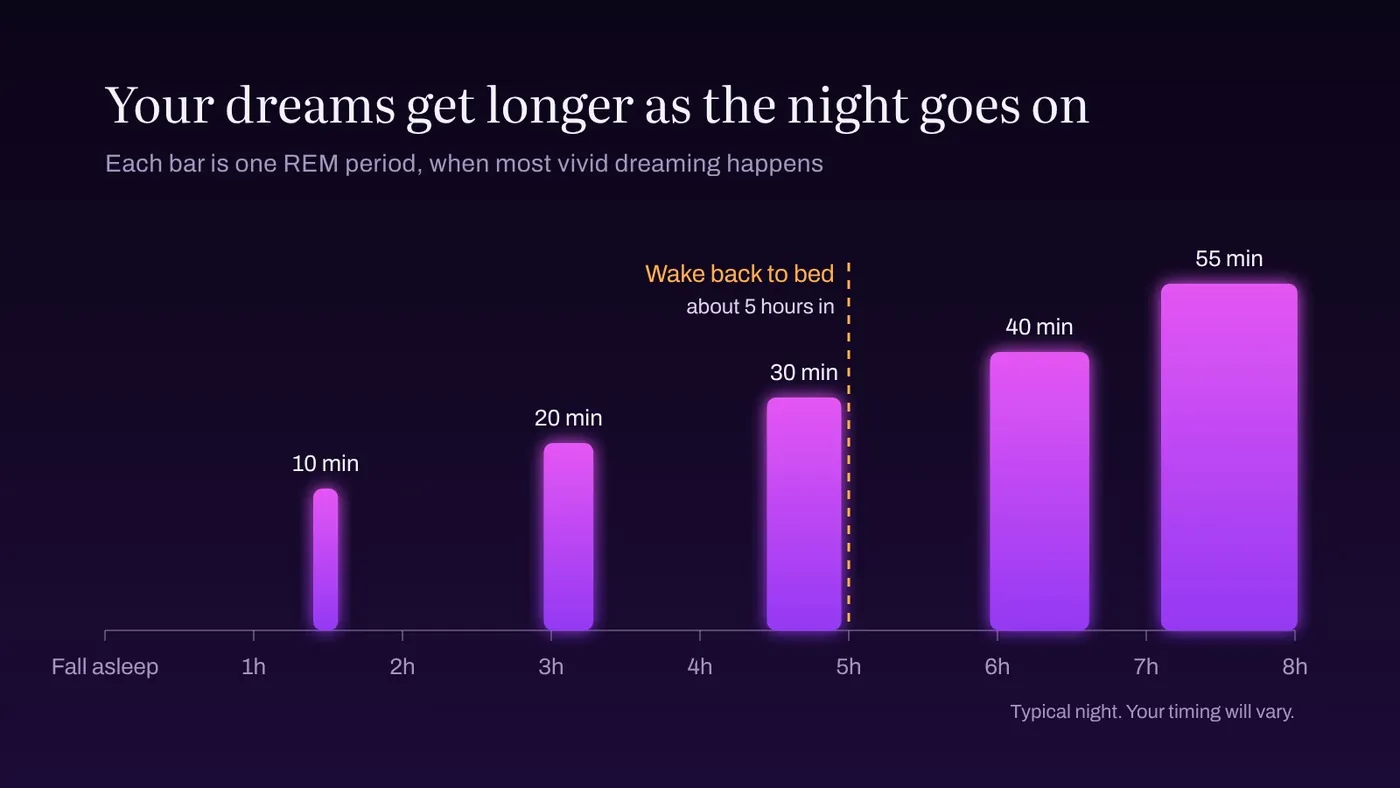
Sleep comes in cycles of roughly 90 minutes. At the end of each cycle you go into REM sleep, which is when most of your vivid dreams happen. The thing most people don't know is that these REM periods aren't all the same length. The first one of the night might only last 10 minutes. By the early morning they can stretch to 45 minutes or even an hour.
So the last few hours of sleep are where your longest, most vivid dreams live. Your brain is also more alert during these late REM periods, which is exactly what you need to notice that you're dreaming. Wake back to bed is all about putting yourself right at the doorway of those dreams with a clear intention in your mind.
What Is Wake Back To Bed?
The idea is simple. You wake up after about five hours of sleep, stay awake for a short time, then go back to sleep while focusing on becoming lucid. Waking up briefly lifts your awareness just enough that it carries over into the dreams that come next.
It's even better when you pair it with the MILD technique. A 2017 study from the University of Adelaide had people wake up after five hours and practice MILD before going back to sleep. On the nights they fell back asleep within five minutes, they had a lucid dream almost half the time. That's a huge number for something that only takes a few minutes and costs nothing.
How To Do It
1. Set an alarm for five hours after you fall asleep. If you go to bed at 11, set it for 4 a.m. If you happen to wake up on your own around then, even better. Just go with it.
2. Get up for 10 to 20 minutes. Keep the lights low and stay off your phone. Bright screens wake you up too much and make it harder to fall back asleep. Instead, write down whatever you can remember from the dream you just had in your dream journal.
3. Look for a dream sign. Read back over that dream and pick out the thing that was strange. Maybe you were back in school, or your house had an extra room, or someone who passed away was there. That's your dream sign, and it's what you're going to look for next time.
4. Go back to bed and set your intention. As you get comfortable, repeat to yourself, "Next time I'm dreaming, I will remember that I'm dreaming." Then picture yourself back in the dream you just wrote down. See the dream sign, and imagine yourself stopping and realizing, "This is a dream." Keep repeating this until you drift off.
5. Stay calm when it happens. The first time you become lucid, the excitement can wake you right up. Rub your hands together or spin around to keep the dream steady. I wrote about a few more ways to do this in 3 ways you can have longer lasting lucid dreams.
The Same Moment Works For Manifesting
If you've read my post on Feeling Is the Secret, this part will sound familiar. Neville Goddard taught that the drowsy state right before sleep is when your subconscious mind is most open to suggestion. He called it a state akin to sleep, and he believed whatever you feel as you fall asleep is what gets impressed on your subconscious.
When you go back to bed after being awake for a few minutes, you slip into that state slowly and with a clear mind, which makes it the perfect time to use it. After your MILD intention, you can spend the last few minutes imagining a scene that implies your wish has already been fulfilled. Feel it as if it's real right now and let yourself fall asleep in that feeling. Some nights it turns into a lucid dream. Other nights it turns into a dream about the very thing you want, which is what I talked about in my post on dream programming.
A Few Things To Keep In Mind
Don't do this every night. Breaking up your sleep can leave you tired if you overdo it, so two or three nights a week is plenty. Weekends or days off are the best time to try it.
If you can't get back to sleep, stay up for less time next time. Some people only need five minutes, while others do better with half an hour. You'll find what works for you after a few tries.
And don't worry if it doesn't work the first night. Even when you don't become lucid, you'll usually remember your dreams much more clearly, and that alone makes it easier to become lucid down the road.
Pick a night this week when you can sleep in a little the next morning and give it a try. Then let me know how it goes over on Instagram at @letsgetlucid. I'd love to hear what you dream about.